
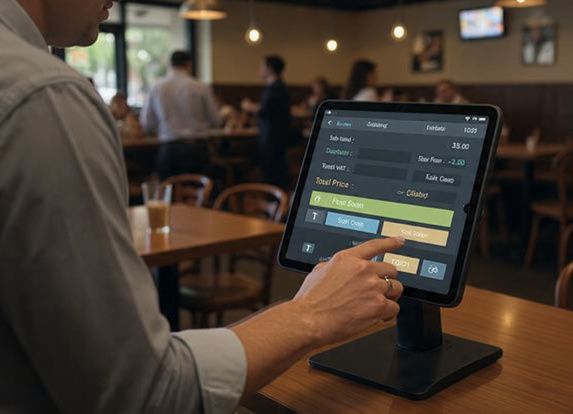
Ask any experienced restaurant owner what single piece of technology has made the biggest difference to their business, and the answer is almost always the same: their point of sale system. The best restaurant point of sale system does not just process payments — it runs your kitchen, controls your stock, manages your staff, tracks your sales, and gives you the data you need to make better decisions every single day.
But with so many options available to UK restaurant operators in 2026, finding the right system can feel overwhelming. Different venue types have different needs. Different business sizes have different budgets. And different operators have different priorities — some need a simple, fast counter system; others need a fully integrated platform managing dozens of tables, multiple kitchens, and several sites.
This guide cuts through the noise. It explains what separates an average restaurant point of sale system from a genuinely great one, what to look for based on your specific venue type, how much you should expect to pay in the UK market, and how to avoid the mistakes that cost restaurant owners time and money when they choose the wrong system.
What Makes the Best Restaurant Point of Sale System?
Not all restaurant point of sale systems are created equal. A system that works brilliantly for a high-volume fast food outlet will not necessarily suit a fine-dining restaurant managing twenty tables across two floors. A POS that handles a busy café counter perfectly may fall short when a restaurant group needs centralised reporting across six sites.
That said, there are qualities that define the best restaurant point of sale systems regardless of venue type. These are the characteristics that separate market-leading systems from mediocre ones.
Purpose-built for hospitality. The best restaurant POS systems are designed from the ground up for food and drink service — not adapted from retail or generic business software. Hospitality has unique requirements: table management, kitchen communication, course-level ordering, allergen tracking, service charge handling, and split bills. A system built for hospitality handles all of these natively. A retail system bolted into a restaurant environment will always have gaps.
Speed under pressure. A restaurant point of sale system is used at the most intense moments of the working day — during a full Saturday evening service, during the lunch rush, during a large private party. The system must be fast to navigate, fast to process payments, and completely stable under sustained high load. Sluggish response times and crashes during peak service are not minor inconveniences — they cost you covers, tips, and customer trust.
Reliability with offline capability. The best restaurant POS systems function even when the internet goes down. An offline mode is not a premium feature — it is a baseline requirement for any serious restaurant operation. Internet connections drop. Routers fail. The system must keep working regardless, syncing all data back to the cloud when connectivity is restored.
Integration across all order channels. Modern UK restaurants receive orders from multiple sources simultaneously — dine-in customers, walk-in counter customers, phone orders, and online delivery platforms. The best restaurant point of sale system consolidates all of these into a single workflow, so kitchen staff see one clear queue rather than juggling multiple tablets and screens.
Actionable reporting. Data is only valuable if it is presented in a way that helps you make decisions. The best restaurant POS systems offer clear, accessible dashboards showing sales by period, best-selling items, average spend, staff performance, and stock levels — all in real time, accessible from any device.
Genuine UK compliance. For UK restaurant operators, the system must handle VAT correctly, generate HMRC-compliant digital records, and work with UK-regulated payment processors. A system designed for the US or Australian market and loosely adapted for UK use will create compliance problems and administrative headaches.
Core Features Every Restaurant Point of Sale System Should Have
When evaluating any restaurant point of sale system for a UK food business, the following features should be present as standard. If a system cannot demonstrate all of these, it is not the best option — regardless of price.
Table management. A visual floor plan with drag-and-drop table arrangement, real-time status indicators, seat-level ordering, and the ability to merge or transfer tables mid-service. This is the foundation of efficient floor management for any sit-down restaurant.
Kitchen communication. Orders must reach the kitchen instantly and accurately, whether via a kitchen printer or a kitchen display screen. The system should route items to the correct kitchen station automatically and support course-level firing so starters go out before mains without manual intervention.
Menu management. The ability to build and edit menus easily, with modifiers, variants, combo deals, and daily specials. Allergen and dietary information should be attached to each item and visible to staff at the point of ordering. Seasonal menus should be schedulable in advance.
Integrated payments. Card, contactless, Apple Pay, Google Pay, and cash — all handled within the same system, with transaction data flowing directly into your sales reports. A disconnected card terminal that does not talk to your POS creates reconciliation work and reporting gaps.
Stock management. Ingredient-level inventory tracking that depletes automatically as orders are placed, with low-stock alerts and end-of-day variance reporting. The best restaurant POS systems with stock management pay for themselves through reduced food waste and better purchasing decisions alone.
Online ordering integration. Direct integration with Deliveroo, Uber Eats, Just Eat, and your own website ordering. All delivery orders should enter the kitchen queue automatically, without any manual input from your staff.
Staff management. Clock-in and clock-out functionality, permission levels by role, individual performance tracking, and tip management. The system should make payroll preparation faster and give managers the data to have informed conversations with their team.
Cloud-based reporting. Real-time sales data, period-over-period comparisons, item-level performance, and staff reports — all accessible from a smartphone or laptop, whether you are on-site or not.
Offline mode. Full order-taking and payment processing capability when the internet is unavailable, with automatic sync when connectivity is restored.
UK compliance. VAT-correct receipts, HMRC-compatible digital records, and integration with UK-regulated payment providers as standard.
Best Restaurant Point of Sale System by Venue Type
The best restaurant point of sale system for your business depends significantly on the type of venue you operate. Here is a detailed breakdown of the most common UK restaurant formats and the specific POS requirements each demands.
Independent Full-Service Restaurants
An independent full-service restaurant — whether that is a neighbourhood bistro, a gastro pub dining room, or a contemporary restaurant with an à la carte menu — needs the fullest range of POS functionality. Table management must support complex floor plans with multiple sections. The ordering system must handle multi-course menus with course-level control. Kitchen communication must be seamless. Reporting must be detailed enough to support informed purchasing and menu engineering decisions.
The best POS system for an independent full-service restaurant is a cloud-based platform on iPad or tablet, with integrated payments, full stock management, and responsive UK-based support. It should be intuitive enough for front-of-house staff to use confidently from their first shift, and powerful enough to give the owner genuine operational insight.
Small Restaurants and Cafés
For small restaurants and cafés — the backbone of the UK's independent hospitality sector — the best restaurant point of sale system balances full functionality with ease of use and affordability. The best POS system for small restaurants UK does not strip out features to reduce cost. It delivers everything a larger restaurant needs, in a package that a solo owner or small team can manage without a dedicated IT resource.
Counter speed is paramount for café operations. The ability to process a complex coffee order with multiple modifications in under thirty seconds, while also managing a food order and a loyalty reward, is what separates a genuinely good café POS system from a basic one. Loyalty programme integration, digital receipts, and end-of-day cash reconciliation should all be standard.
Takeaways and Fast Food
For UK takeaways — Indian restaurants, pizza shops, kebab shops, chicken shops, fish and chips shops, noodle bars, and every other format — the best restaurant point of sale system is one built around order speed and multi-channel order management. The system must process walk-in, phone, and online orders simultaneously, display them clearly to the kitchen, and manage preparation and collection timing without confusion.
EPOS software for takeaways must integrate with delivery aggregators and support postcode-based delivery zone pricing. It must handle large, complex menus with many modifier options. And it must be fast — in a busy takeaway, the speed of order entry directly determines how many customers you can serve per hour.
The best POS for a takeaway is also one that provides end-of-day driver reconciliation, cash management, and clear daily takings reports that make accounting simple even for owner-operated businesses without a dedicated finance function.
Restaurants with Multiple Locations
For restaurant groups operating two or more UK sites, the best restaurant point of sale system is one built for centralised multi-site management. The ability to push menu updates, pricing changes, and promotional offers across all locations simultaneously from a single back-office saves significant time and eliminates the inconsistencies that arise when each site manages its own menu independently.
Consolidated reporting across locations is equally important. A group-level dashboard showing revenue, covers, average spend, and stock performance across all sites in real time gives management teams the visibility to identify high-performing locations, spot operational problems early, and make faster, better-informed decisions.
A POS system for restaurant chains and groups must also support site-level flexibility — allowing individual managers to customise their floor plan, adjust printer settings, or run a site-specific promotion — without those changes affecting other locations in the group.
Ghost Kitchens and Delivery-Only Operations
Ghost kitchens and delivery-only restaurant concepts have grown rapidly across the UK, particularly in major cities. These operations have no dine-in component — their entire revenue comes through online ordering platforms. The best restaurant point of sale system for a ghost kitchen is built around order aggregation and kitchen efficiency.
All orders from all platforms — Deliveroo, Uber Eats, Just Eat, direct website — must flow into a single, prioritised kitchen queue. Order timing, prep tracking, and packaging management must be clearly displayed. And the system must provide detailed per-platform sales reporting so operators can evaluate the profitability of each channel individually.
Food Trucks and Mobile Catering
Mobile food businesses need a restaurant point of sale system that is genuinely portable. A tablet or iPad running a cloud POS, paired with a compact Bluetooth card reader and a small receipt printer, gives a food truck or market stall operator everything they need in a setup that fits on a folding table.
The system must function reliably on a 4G or 5G mobile connection and include a full offline mode for locations with poor signal. Transaction speed is everything in a mobile setting — customers at a market are not prepared to wait while the system catches up.
Restaurant Point of Sale System Pricing: What to Expect in the UK
Understanding the true cost of a restaurant point of sale system requires looking beyond the headline monthly subscription fee. Here is a clear breakdown of what UK restaurant operators should budget for in 2026.
Software subscription costs for a cloud-based restaurant POS system in the UK typically range from £30 to £50 per month for a basic single-terminal setup, £70 to £150 per month for a full restaurant system with table management and stock control, and £150 to £400 per month for multi-location restaurant groups. These are ongoing costs that cover software access, automatic updates, and usually some level of customer support.
Hardware costs are a one-off or periodic expense. A single iPad-based terminal with card reader, receipt printer, and cash drawer typically costs between £400 and £900. A full restaurant setup with multiple terminals, kitchen display screens, and kitchen printers will typically cost between £1,200 and £3,000. Many providers offer EPOS hardware deals or bundled packages that reduce upfront costs when signing a 12 or 24-month contract.
Payment processing fees are charged per transaction and typically range from 0.5% to 1.5% for UK card transactions, depending on the provider and your monthly transaction volume. At high volumes, negotiating a reduced processing rate can deliver meaningful savings over the course of a year.
Support costs vary between providers. Some include unlimited UK-based support in their monthly subscription; others charge separately for support contracts or limit free support to basic hours. Given how critical uninterrupted operation is for a restaurant, always clarify what support is included and what it costs before signing anything.
The cheapest restaurant point of sale system is rarely the best value. A system that costs £20 per month less than a competitor but lacks offline mode, has poor support, or fails under peak load will cost far more in lost revenue and staff frustration over the course of a year than the subscription saving is worth.
Common Mistakes to Avoid When Choosing a Restaurant POS System
Learning from the experience of other UK restaurant operators can save you significant time, money, and frustration. These are the most common mistakes restaurant owners make when choosing a point of sale system.
Choosing on price alone. The lowest-cost option is rarely the best fit. A cheap till system for a small restaurant that lacks offline mode, cannot integrate with your delivery platforms, or has no UK-based support will create operational problems that far outweigh any subscription saving.
Not testing offline mode. Many restaurant owners only discover their POS system has poor offline capability after their broadband drops during a busy service. Always test offline mode yourself — take the system offline deliberately and confirm that orders and payments continue to function exactly as they should.
Underestimating training time. Even intuitive systems require proper onboarding. Allow time for staff training before a busy period, and ensure your provider offers accessible training materials and responsive support during the first weeks of use.
Ignoring integration requirements. If you use an accounting platform, a reservation system, a loyalty programme, or delivery aggregators, confirm that your chosen POS system integrates with all of them before you commit. Integration gaps create manual duplication work and reporting inaccuracies.
Locking into long contracts without flexibility. Some EPOS providers push long-term contracts with significant exit penalties. Where possible, opt for flexible monthly or annual terms, particularly when trialling a new system for the first time.
Choosing a system not built for UK compliance. VAT handling, HMRC digital records, and UK payment processing are not optional. A system designed for another market and adapted for the UK will often have gaps in compliance functionality that create problems at year-end or during a HMRC review.
How to Evaluate a Restaurant Point of Sale System Before You Buy
Before committing to any restaurant point of sale system, follow this straightforward evaluation process.
Request a live demonstration from the provider. A good demo should show you the full order-to-payment workflow, the kitchen communication setup, the reporting dashboard, and the back-office menu management tools. Push the demonstrator to show you the features you care about most — do not let them steer you only to the parts that look impressive.
Ask specifically about offline mode. Disconnect the demo device from the internet during the demonstration and confirm that orders and payments continue to work exactly as they do online. If the system cannot demonstrate this cleanly, it is not ready for a live restaurant environment.
Ask about the onboarding process. How is menu data loaded? Who configures the kitchen printers? What training is provided for front-of-house staff? How long does a typical setup take? A provider with a well-defined onboarding process is far less likely to leave you struggling on go-live day.
Ask about support. What are the support hours? What is the average response time for an urgent issue during service? Is support included in the subscription or charged separately? Can you speak to existing customers about their support experience?
Request a trial period where possible. Some providers offer a free trial of their software before hardware is purchased. Use this to put the system through its paces in a realistic environment — even setting it up on your own iPad and processing test orders through it will reveal a great deal about whether it is the right fit for your operation.
Frequently Asked Questions
What is the best restaurant point of sale system for a small UK restaurant?
For most small UK restaurants, the best option is a cloud-based POS system running on an iPad or Android tablet. This delivers full restaurant functionality — table management, kitchen printing, stock control, and reporting — without the large upfront hardware cost of a traditional fixed terminal. Look for a system with offline mode, integrated UK payments, and UK-based support included in the subscription.
What is the difference between a restaurant POS system and a retail POS system?
A restaurant POS system is built specifically for food and drink service. It includes table management, multi-course ordering, kitchen printer integration, allergen management, service charge handling, and hospitality-specific reporting. A retail POS system handles products and inventory but lacks these hospitality-specific functions. Using a retail POS in a restaurant creates workarounds, gaps, and frustration for both staff and management.
How much does the best restaurant point of sale system cost in the UK?
A quality cloud-based restaurant POS system in the UK typically costs between £70 and £150 per month in software fees for a single-site restaurant with full functionality, plus hardware costs of £600 to £1,800 depending on the equipment required. Entry-level systems for small cafés or takeaways start from around £30 per month. Payment processing fees of 0.5% to 1.5% per transaction should also be factored into the total cost.
Can a restaurant point of sale system work without internet?
Yes — any restaurant POS system worth considering should include a full offline mode. The best systems process orders and payments locally when the internet is unavailable and sync all data automatically when connectivity is restored. Always test this feature yourself before committing to a system.
Does a restaurant point of sale system integrate with Deliveroo and Uber Eats?
The best restaurant POS systems integrate directly with Deliveroo, Uber Eats, Just Eat, and direct website ordering platforms. Orders from all channels appear automatically in the kitchen queue without any manual re-entry. This is an essential feature for any UK restaurant or takeaway with an active delivery channel.
How long does it take to set up a restaurant point of sale system?
Most modern cloud-based restaurant POS systems can be set up and operational within one to two days for a single-site restaurant. Hardware installation typically takes a few hours. Menu configuration, staff training, and payment integration add time depending on complexity. A well-supported provider will guide you through the full setup process.
What restaurant POS system is best for a multi-site UK restaurant group?
For multi-site operations, the best restaurant point of sale system is a cloud-based platform with centralised menu management, consolidated cross-site reporting, and group-level stock visibility. Look for a system that allows site-level customisation without losing central control, and that scales easily as you add new locations.
Conclusion
The best restaurant point of sale system is not necessarily the most feature-rich, the most expensive, or the most widely marketed. It is the one that fits your specific venue type, works reliably under the demands of your service, is backed by support you can count on, and is genuinely built for the UK market.
For UK restaurant owners in 2026, the decision comes down to a handful of non-negotiables: cloud-based with offline capability, purpose-built for hospitality rather than adapted from retail, integrated with UK payment processing and delivery platforms, and supported by a team that picks up the phone when you need them.
Our restaurant point of sale system was designed from the ground up for UK food businesses — restaurants, cafés, takeaways, and everything in between. It combines the features that professional hospitality operations demand with the simplicity and affordability that independent UK operators need. If you are ready to see what the best restaurant point of sale system looks like in practice, we would love to show you.
Written by a UK-based restaurant point of sale system provider. All pricing information reflects typical UK market rates as of 2026.