
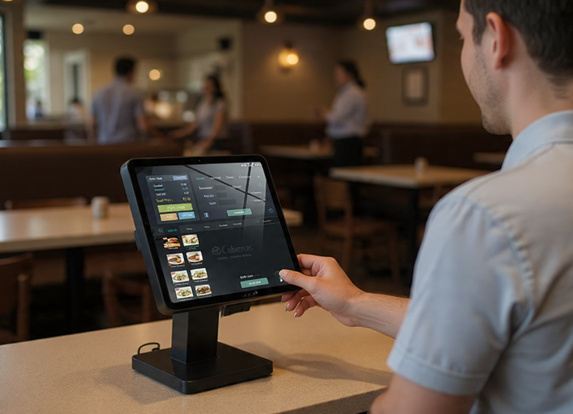
Running a restaurant, café, or takeaway in the UK is no small feat. Between managing staff, keeping customers happy, tracking stock, and staying on top of your finances, the last thing you need is a point of sale system that slows you down. Yet, many hospitality businesses across the UK are still relying on outdated tills or clunky legacy systems that were never designed for the fast-paced demands of modern food service.
Choosing the right EPOS (Electronic Point of Sale) system is one of the most important technology decisions you'll make for your business. Get it right, and it becomes the backbone of your entire operation — processing payments, managing orders, reporting on sales, and even helping you understand your customers better. Get it wrong, and you're looking at lost revenue, frustrated staff, and a system you'll want to rip out within a year.
This guide is designed to walk you through everything you need to know before making that decision — from understanding what an EPOS system actually does, to the key features you should look for, and the questions you need to ask any provider before signing a contract.
What Is an EPOS System, and Why Does It Matter?
An EPOS system is far more than just a till. At its core, it's a combination of hardware and software that processes sales transactions — but in 2026, the best systems go much further than that. A modern EPOS platform can:
- Take orders at the table, counter, or online
- Process card, contactless, and digital wallet payments
- Track your menu items and update prices instantly
- Manage stock levels in real time
- Generate detailed sales and performance reports
- Integrate with kitchen display systems and printers
- Connect to delivery platforms and online ordering tools
- Help you manage staff rotas and track individual performance
For a UK restaurant, café, or takeaway, having all of this in one place isn't a luxury — it's a necessity. The hospitality sector here is highly competitive, margins are tight, and customers expect fast, seamless service. The right EPOS system gives you the tools to deliver exactly that.
iPad-Based vs Traditional EPOS: What's the Difference?
One of the first decisions you'll face is whether to go with a traditional countertop EPOS terminal or a modern iPad-based system. This is an important distinction, and it's worth understanding the difference before you go any further.
Traditional EPOS systems are typically purpose-built hardware — a large touchscreen terminal, a separate cash drawer, a receipt printer, and often a back-office PC to run the management software. They can be reliable, but they tend to be expensive to purchase, costly to repair, and cumbersome to update. Many older systems also lock you into proprietary hardware, meaning you're dependent on a single supplier for everything.
iPad-based EPOS systems, like CubePOS, take a very different approach. They run on standard Apple iPads, which means the hardware is affordable, widely available, and easy to replace if something goes wrong. The software is cloud-based, so it updates automatically and can be accessed from anywhere. You can add extra screens, handheld devices, and kitchen displays with minimal setup, and the system scales effortlessly whether you're running a single café or a multi-site restaurant group.
For most UK hospitality businesses in 2026, an iPad-based system offers the better balance of flexibility, cost, and functionality. That said, it's important to choose a provider with a proven track record in the UK market, solid customer support, and software that's genuinely built for the food and drink industry.
Key Features to Look for in a UK Restaurant EPOS System
Not all EPOS systems are created equal. When evaluating your options, these are the features that matter most for UK restaurant, café, and takeaway operators.
1. Ease of Use
This might sound obvious, but it's remarkable how many EPOS systems are complicated to use. Your staff will be using this system every single day, often under pressure during a busy lunch rush or a packed Friday evening. The interface needs to be intuitive, responsive, and easy to learn. Ideally, new staff should be able to get up to speed within an hour or two, not days.
Ask any provider for a live demo and, if possible, a free trial period. You'll know within minutes whether the system feels natural or frustrating.
2. Table Management
For sit-down restaurants and cafés, table management is essential. You need to be able to see at a glance which tables are occupied, which are waiting for their order, and which are ready to pay. A good EPOS system will give you a visual floor plan that you can customize to match your actual layout, along with clear indicators of order status and time elapsed.
This feature alone can dramatically reduce errors and improve the flow of service, particularly during peak hours.
3. Menu Management
Your menu changes — seasonally, daily, or even during a service if you run out of a particular dish. Your restaurant EPOS system should make it simple to add, remove, or edit items, update prices, and create modifiers (extra toppings, dietary options, portion sizes, and so on). Changes should take effect instantly across all devices without any technical knowledge required.
Cloud-based systems like CubePOS have a significant advantage here, because menu updates can be made from any device, including your phone, and they sync across the entire system in real time.
4. Payment Processing
The UK has one of the highest rates of contactless and digital payment adoption in the world. Your EPOS system needs to handle card payments (Visa, Mastercard, Amex), contactless, Apple Pay, Google Pay, and increasingly, QR code payments. It should integrate cleanly with a card payment terminal so that staff don't have to manually enter amounts on a separate device — this is a common source of errors and slows down the checkout process.
Make sure you understand the payment processing fees involved. Some EPOS providers bundle payment processing into their subscription; others require you to use a specific payments partner. Always compare the total cost of ownership, not just the headline subscription price.
5. Kitchen Display System (KDS) Integration
If you're still relying on paper tickets in the kitchen, you're leaving efficiency on the table. A Kitchen Display System replaces those paper tickets with a digital screen that receives orders directly from the EPOS. Orders are displayed clearly, can be prioritised, and are marked off as they're completed. This reduces errors, speeds up service, and improves communication between front-of-house and the kitchen.
Look for an EPOS system that integrates natively with a KDS, or at minimum supports kitchen printer integration as a stepping stone.
6. Reporting and Analytics
One of the most powerful benefits of a modern EPOS system is the data it generates. You should be able to see, at any time, which dishes are your best sellers, what your peak trading hours are, how individual staff members are performing, and how your revenue today compares to last week or last month.
Good reporting doesn't require a degree in data science. Look for a system with a clean, visual dashboard that gives you the key metrics at a glance, along with the ability to drill down into more detailed reports when needed.
7. Takeaway and Delivery Integration
If you run a takeaway or offer delivery alongside your restaurant service, your EPOS system needs to handle this smoothly. Look for integration with major delivery platforms (Just Eat, Uber Eats, Deliveroo) so that online orders flow directly into your EPOS without the need for a separate tablet or manual re-entry. This is a massive time-saver and dramatically reduces the risk of errors.
8. Offline Functionality
This is one that many people overlook until it's too late. What happens if your broadband goes down during a busy Saturday evening? A cloud-based system that requires a constant internet connection could grind your operation to a halt. Look for an EPOS system that can continue to take orders and process payments offline, syncing everything back to the cloud once connectivity is restored.
9. Loyalty and Customer Management
Building a loyal customer base is one of the most effective ways to grow a hospitality business. Some EPOS systems include built-in loyalty programmes, allowing you to reward repeat customers with points, discounts, or free items. Even if this isn't a priority right now, it's worth choosing a system that supports it so you have the option to activate it in the future.
10. Support and On-boarding
Technology is only as good as the support behind it. When something goes wrong — and at some point, it will — you need to be able to get help quickly. Ask prospective providers about their support hours, response times, and the channels available (phone, email, live chat). Check reviews from other UK hospitality businesses to get a realistic picture of what the support experience is actually like.
Good providers will also offer thorough onboarding, helping you set up your menu, configure your hardware, and train your staff before you go live.
Questions to Ask Before You Sign
Before committing to any EPOS provider, make sure you get clear answers to these questions:
- What is the total cost, including hardware, software, and payment processing?
- Is there a minimum contract term, and what are the exit clauses?
- Does the system work offline, and if so, which features are available?
- How are software updates handled, and is there any downtime involved?
- What integrations are available (accounting software, delivery platforms, online ordering)?
- What does the on-boarding process look like, and how long does setup typically take?
- What are the support hours, and how quickly do you typically respond to issues?
- Can I speak to existing UK customers in the hospitality sector?
A reputable provider will have confident, clear answers to all of these questions. If you encounter evasiveness or vague responses, that's a red flag.
Why CubePOS Is Built for UK Hospitality
CubePOS was designed from the ground up with UK restaurants, cafés, and takeaways in mind. Built on iPad, it combines the reliability and intuitive design of Apple hardware with software that's specifically tailored to the needs of UK food service businesses.
From a streamlined table management interface to real-time menu updates, integrated kitchen display support, and detailed sales analytics, CubePOS gives you everything you need to run a smarter, faster, more profitable operation. And because it's cloud-based, you can check in on your business from anywhere — whether you're on the floor, at home, or opening a second site.
Our UK-based support team is available to help you get set up quickly and resolve any issues fast, so you're never left struggling during a service.
Final Thoughts
Choosing the right EPOS system for restaurants is a decision that will affect your business every single day. Take the time to evaluate your options properly, ask the right questions, and prioritize the features that matter most for your specific type of operation. Whether you're running a bustling city center restaurant, a neighborhood café, or a busy takeaway, the right EPOS system will pay for itself many times over in saved time, reduced errors, and better business decisions.
Ready to see how CubePOS can transform your operation? Visit www.cubepos.co.uk to book a free demo with our team.