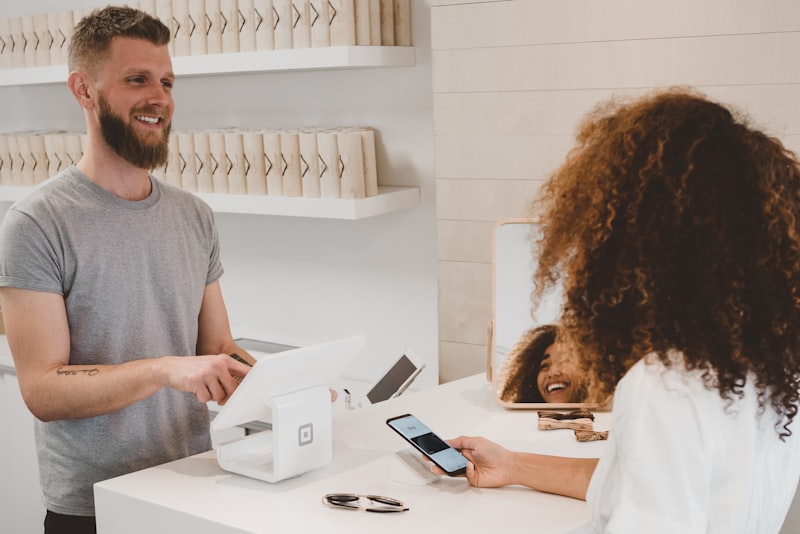
If you walked into a newly opened independent café or a pop-up street food vendor in the UK five years ago, you would almost certainly see the same thing resting on the counter: a sleek, white Square reader or a compact Zettle card machine. They were revolutionary. For the first time, small hospitality businesses could accept card payments without jumping through the massive, expensive hoops set up by traditional high-street banks.
These systems promised simplicity: zero upfront monthly fees, a cheap piece of hardware, and a flat percentage cut of every transaction. For a market stall selling £4 coffees, it was the perfect gateway into digital payments.
But as these businesses grew from pop-ups to brick-and-mortar restaurants, or as independent restaurateurs expanded their floor plans and menus, a harsh operational reality began to set in. A system built for a retail boutique or a casual coffee stand fundamentally breaks down when subjected to the chaotic, high-pressure environment of a full-service restaurant kitchen.
Today, thousands of UK hospitality venues are quietly pulling the plug on these entry-level systems. They are absorbing the upfront costs of dedicated, hospitality-first EPOS (Electronic Point of Sale) systems because they’ve realized that "free software" is actually costing them thousands of pounds a month in hidden fees, kitchen errors, and wasted labor.
Here is a deep dive into exactly why UK restaurants are outgrowing Square and Zettle, and what they are looking for in their replacements.
1. The "No Monthly Fee" Trap: How Flat-Rate Processing Kills Margins
The primary marketing hook for entry-level payment providers like Zettle (owned by PayPal) and Square is the lack of a monthly software subscription. You only pay when you make a sale. Typically, this is a flat rate—often hovering around 1.75% per tap or chip-and-pin transaction.
When your restaurant is doing £2,000 a week in sales, giving away 1.75% (£35) feels completely manageable. It's the cost of doing business. But as your venue scales, that flat rate becomes a financial anchor.
If a busy London gastropub is turning over £25,000 a week, a 1.75% flat rate equals £437.50 a week, or roughly £22,750 a year in credit card processing fees alone.
Dedicated restaurant EPOS providers often integrate with payment processors (like Dojo, Paymentsense, or Adyen) that offer interchange-plus pricing. Interchange-plus separates the actual cost of the card network (Visa/Mastercard) from the processor's markup. Debit cards, which make up the vast majority of UK pub and restaurant transactions, have incredibly low interchange rates (often fractions of a percent).
By switching to an EPOS that supports customized payment gateways, that same £25,000-a-week pub can often blend their processing rate down to 0.8% or 1%. That seemingly tiny drop saves the business over £10,000 a year—more than enough to pay for a premium, dedicated EPOS software subscription and top-tier hardware, while still pocketing thousands in pure profit.
2. Retail Logic vs. Restaurant Workflow
Square and Zettle were originally designed for retail. They excel at "Item A + Item B = Total." If you run a candle shop, this is all you need. If you run a busy tapas restaurant, retail logic will bring your service to a grinding halt.
Restaurants require highly specific workflows that entry-level POS systems struggle to handle elegantly:
Table Management and Floor Plans
In a full-service environment, a server needs to visually see the floor plan on the screen. They need to know that Table 12 has been seated for 45 minutes and hasn't ordered mains, or that Table 4 is waiting for the bill. While entry-level systems have bolted on basic table tracking over the years, dedicated EPOS systems are built entirely around it. They use color-coding to show the status of every table in real-time, preventing bottlenecks at the door and ensuring tables are turned efficiently.
Course Firing and Pacing
A customer orders a round of drinks, garlic bread to share, two steaks, and a side of fries. In a retail-first POS, all of these items are sent to the printer at once. The kitchen is left guessing when to fire the steaks.
A hospitality EPOS allows the server to ring in the entire order but group the items by courses. They send the starters immediately, and the mains are held in the system. When the server clears the starter plates, they press a single "Fire Mains" button on the till, which alerts the kitchen. This enforces pacing, ensuring food doesn't sit dying under a heat lamp while the guests are still eating their appetizers.
Complex Modifiers and Conversational Ordering
Guests rarely order exactly as the menu is written. A burger order might look like: "No tomato, extra pickles, sauce on the side, substitute regular fries for sweet potato fries, allergy to dairy."
Retail-first systems handle modifiers poorly, often requiring staff to type out custom notes for the kitchen. Typing takes time, and handwritten notes lead to misinterpretations. A dedicated restaurant EPOS uses conversational ordering flows. It forces the server to answer prompt questions (Meat temp? Side choice?) and has pre-programmed buttons for common exclusions ("NO", "EXTRA", "ON SIDE", "ALLERGY"). This speeds up ordering and drastically reduces food waste caused by kitchen remakes.

3. The Death of Paper Tickets: Kitchen Display Systems (KDS)
The traditional kitchen printer—chugging out strips of paper over a hot stove—is rapidly becoming obsolete. Paper tickets get lost, dropped in sauces, or pulled out of order by stressed line cooks.
As restaurants mature away from entry-level POS systems, they are upgrading to Kitchen Display Systems (KDS). A KDS is a ruggedized screen mounted directly above the prep stations. When an order is punched in at the front of house, it appears instantly on the screen.
But a true hospitality EPOS takes the KDS further by acting as a digital expeditor. If an order contains a well-done steak (which takes 20 minutes to cook) and a side salad (which takes 3 minutes to plate), a smart KDS won't show the salad to the cold station immediately. It routes the steak to the grill station first, waits 17 minutes, and then flashes the salad to the garde manger. Both items finish at the exact same time, ensuring peak food quality.
Square and Zettle offer basic kitchen printing, but their KDS capabilities lack the sophisticated routing, prep-time delays, and multi-station synchronization required by a high-volume UK kitchen.
4. Solving "Tablet Hell": True Delivery Integration
The rise of Just Eat, Deliveroo, and Uber Eats fundamentally changed the UK restaurant landscape. For many venues, delivery now makes up 30% to 50% of their revenue. But this created a new operational nightmare often referred to as "Tablet Hell."
With an entry-level POS, the restaurant is forced to keep a separate tablet on the counter for each delivery provider. When an Uber Eats order comes in, it chimes on the tablet. A staff member must read the tablet, turn around, and manually type that exact order into the Zettle or Square till so it prints in the kitchen and the accounting is recorded.
This manual double-entry is a disaster during a Friday night rush. It requires dedicated labor, and it introduces massive human error. If a cashier misses a modifier while re-typing the order, the kitchen cooks it wrong, the customer complains to the app, and the restaurant is forced to issue a refund.
A dedicated restaurant EPOS solves Tablet Hell through direct API integration. When a customer orders on Deliveroo, the order bypasses the front counter entirely. It injects directly into the EPOS, prints in the kitchen (or pops up on the KDS), and reconcils the sales data automatically. This single feature alone drives many restaurants to upgrade their POS, as it saves hours of labor and drastically reduces refunded food.
5. Recipe-Level Inventory and Prime Cost Control
In the hospitality industry, survival depends on controlling your "Prime Costs"—the combination of your Cost of Goods Sold (COGS) and your labor. For most restaurants, food cost should sit between 28% and 32%.
Basic POS systems track inventory at the item level. If you sell a bottle of Coke, it deducts one bottle from your stock. That works for a retail shop. It does not work for a kitchen.
A restaurant doesn't sell a "Burger" as a single stock item. A burger is an assembly of sub-ingredients: a bun, a 6oz beef patty, a slice of cheese, and an ounce of sauce. A dedicated hospitality EPOS manages recipe-level inventory.
When a server rings in a cheeseburger, the EPOS automatically depletes 6oz of ground beef, 1 bun, and 1 slice of cheese from the digital walk-in freezer. At the end of the week, the head chef can run a variance report. If the system says they should have 10kg of beef left, but a physical count shows only 5kg, the owner immediately knows there is an issue—whether it's over-portioning by the line cooks, dropped product, or theft.
Without this granular level of data, restaurant owners are managing their businesses completely blind, waiting for their accountant to tell them they lost money at the end of the month.
6. Splitting the Bill Without the Headache
It sounds like a minor detail, but the way a POS handles payments can make or break the customer experience at the end of a meal. In the UK, it is incredibly common for a large party to ask to split the bill.
With retail-centric systems, splitting a £300 bill evenly across six cards is relatively easy. But what if the party wants to split by item? "I'll pay for my steak and two beers, she's paying for her salad and the bottle of wine, and we'll split the garlic bread."
Trying to execute this on a basic POS often requires a manager with a calculator, voiding items, creating new temporary tickets, and keeping the guests waiting awkwardly for ten minutes. A hospitality-built EPOS handles this natively. Staff can drag and drop specific items onto different digital seats, split individual items (like a shared bottle of wine) into fractions, and process multiple cards seamlessly. It turns a ten-minute headache into a thirty-second transaction, freeing up the table for the next seating.
The Verdict: An Investment, Not an Expense
Square and Zettle have their place. If you are launching a food truck, testing a concept at a weekend market, or running a very small café with a limited menu, they are fantastic, low-risk tools to get your business off the ground.
But when you graduate into a full-scale restaurant operation, clinging to "free" software becomes the most expensive mistake you can make. The invisible costs—high credit card processing fees on large volumes, wasted labor from manual delivery tablet entry, food waste from poor inventory tracking, and slow table turnover—far outweigh the monthly subscription of a professional EPOS system.
UK hospitality businesses are making the switch because they realize that an EPOS is no longer just a cash register. When properly utilized, a dedicated system like CubePOS acts as the central nervous system of the restaurant. It protects margins, smooths out kitchen chaos, and ultimately allows owners to stop fighting with their technology and get back to doing what they do best: providing incredible hospitality.